24.11.2026
Why a holiday is stress too: the Holmes–Rahe scale
Ekvilibro Journal · Stress and burnout
Elena Lvova, author of the Ekvilibro system, crisis management consultant and psychologist
In short. The body spends strength on any change, so a wedding, a move and even a holiday are stress too. The Holmes–Rahe scale shows the total load over a year and suggests when it is time to restore your strength first.
When we talk about stress, we usually mean trouble: a conflict at work, illness, debt. But the body works differently. It counts not whether an event is good or bad, but how much strength it takes to readjust and recover. A wedding, a promotion, moving into a long-awaited flat and even a holiday all require us to readjust, and so they too use up our strength.
That is why a year full of happy changes can sometimes be as draining as a hard one. And a person cannot understand where the tiredness comes from, since “everything is fine”.
Where the scale came from
In 1967 the physicians Thomas Holmes and Richard Rahe studied more than five thousand medical records and noticed a pattern: illness was often preceded by major changes in life, and not only difficult ones, but happy ones too.
They drew up a list of 43 life events and rated each by how much readjustment it requires. Marriage was given 50 units, a change of residence 20, even a holiday 13. Adding up the values of the events in a year shows the total load.
Since then the scale has become one of the best-known tools for assessing stress. I learned about it in 2019, compared it with my own life and the stories of the people I worked with, and was amazed at how accurate it is.
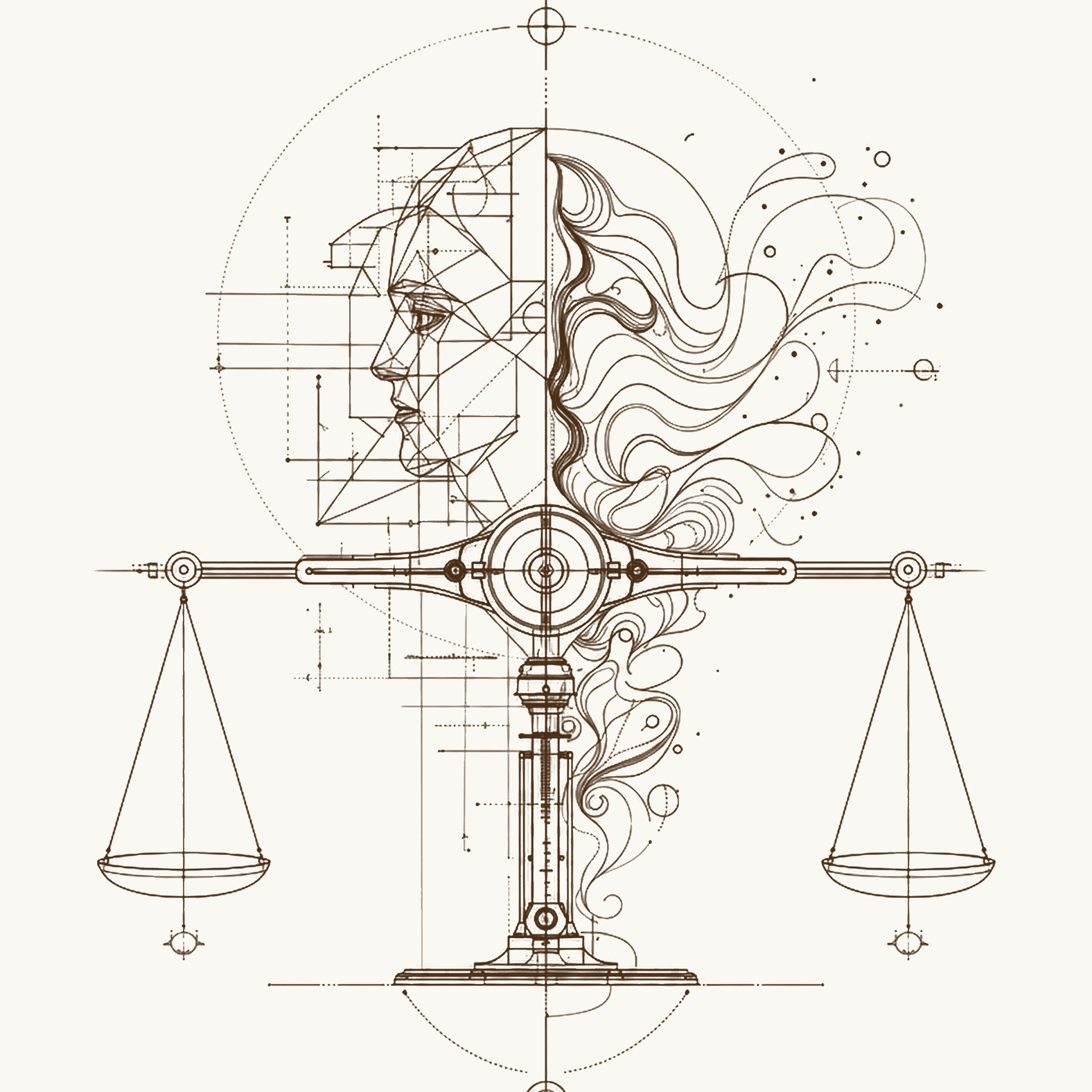
What the result shows
The scale divides results into three zones:
- under 150: few changes, the year was relatively calm;
- 150 to 299: a noticeable load, the body spends a lot of strength on readjusting;
- 300 and above: a high load, the body is working at the limit of its capacity.
According to the authors of the scale, the higher the score, the higher the likelihood of health problems in the near future. It is a signal that recovery deserves more time.
What the scale does not take into account
The scale shows how much strength the changes took. But it does not take into account the main thing: how a person meets those changes. The same events throw one person off course and make another stronger.
The difference lies in the position from which a person views what is happening. If emotions do not distort perception, even big changes do not catch you off guard, and decisions stay balanced. In the Ekvilibro system this position is called the Observer, and it can be developed.
Strength first, everything else later
Inner work, like any other work, needs energy. So I suggest that people with different results start in different ways.
After a calm year there is enough strength to look inside: to notice what hurts and learn to see your reactions from the outside.
Under a high load, searching for causes and digging into what hurts is pointless: there are simply no resources for it. First, strength needs to be restored: sleep, quiet, a day without work calls, whatever fills you up in particular. Inner work will go more easily once the strength returns.
Taking the scale yourself
The stress scale can now be taken on my website. Three minutes, and you see your result, what it means, and the first step that suits your particular load.
If after the test you would like to understand what exactly is draining your strength and where to begin, a consultation is the next step. About consultations →
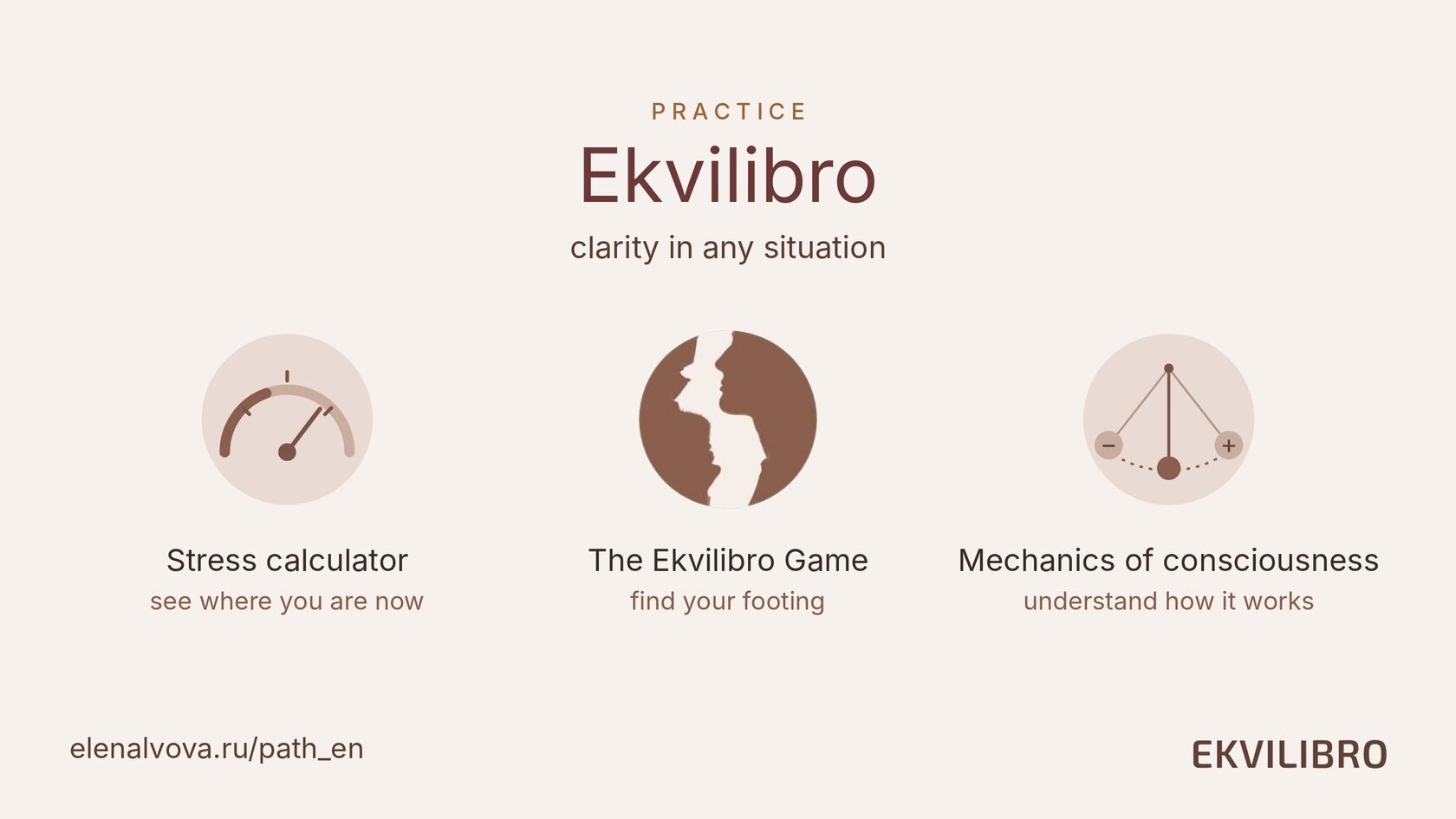
Ekvilibro Practice
Stress calculator: how much strength the changes of the past year have taken.
The Ekvilibro Game: simple steps to notice automatic reactions and find stability.
Mechanics of consciousness: why reactions repeat and how to choose your state.
Online. No sign-up.
About the author
Elena Lvova is the founder and head of the Ekvilibro center, author of the Ekvilibro system, crisis management consultant and psychologist. 15 years in management and consulting. Author of 12 books (in Russian) and more than 30 scientific and practical papers, from psychology and economics to crisis management and conflict studies.
ORCID iD: 0009-0007-3069-9106
elenalvova@ekvilibro.ru
elenalvova.ru/en
Read also