24.11.2026
How to stop swinging between extremes
Ekvilibro Journal · Hard decisions
An interview with Elena Lvova, author of the Ekvilibro system, crisis management consultant and psychologist
In short. What makes us swing between extremes is identification: a person merges with one pole and runs from the other. The Ekvilibro Prism helps to find the Observer position — a neutral point from which the whole space of options is visible.
— Elena, you often say you look at things “through the Ekvilibro prism”. What does that mean?
— A general I know used to say: “What cannot be described on paper does not exist in nature.” For me, anything that cannot be packed into a simple, clear diagram is left hanging in the air. So we packed it. The Ekvilibro Prism is a way of looking at anything more widely: not getting a ready-made answer, but finding your own.
— Where does this way of looking begin?
— With polarity. Everything has a pair. In the Prism these are “+” and “−”, two poles of one axis.
— Plus is good and minus is bad?
— No. They are two poles, not a judgement. One does not exist without the other, just as there is no inhale without an exhale.
— What happens to a person on this axis?
— They merge with one pole. They hold on to what they want and run from what they do not want. That is identification. It is what sets the pendulum of duality swinging, and with it come stress and loss of strength.
— How do you stop the pendulum?
— By finding the Observer position. It is neutral, an emotional calm. From there both poles are visible, and neither of them controls the person. That is exactly why the whole space of options opens up from here.
— Isn’t neutrality just indifference?
— No. An indifferent person does not care what happens. In neutrality it matters; it is just that no option pulls you towards it. There is no wind, but the ship is afloat and can choose its course.
— In the Prism the movement goes from one pole to the other and only then to the middle. Why not straight to the middle?
— To find the golden mean, you have to visit both poles in your mind: switch from one to the other, and then find the point between them. The middle can only be found by noticing the extremes.
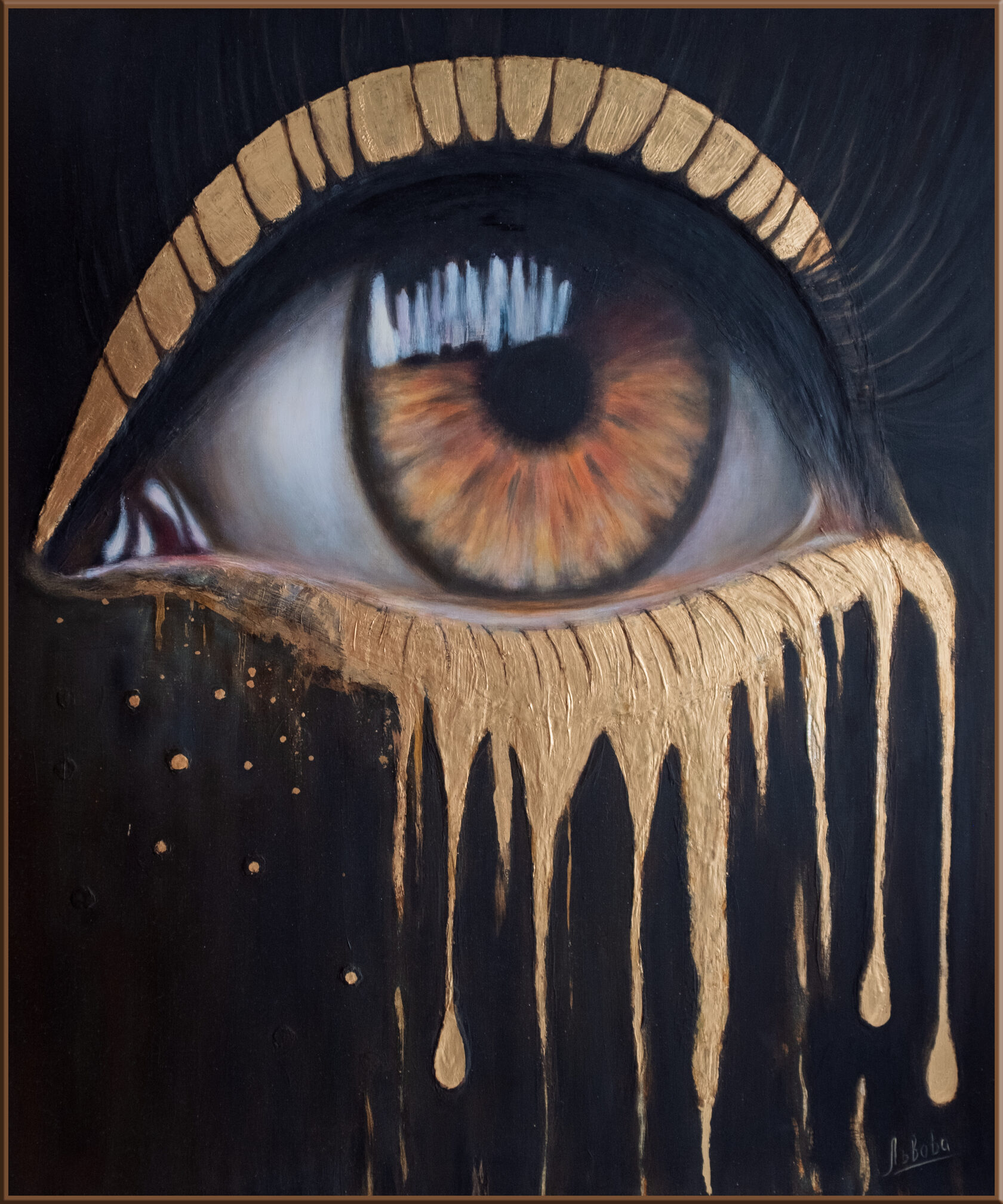
Ekvilibro Art
— How can this be put simply and clearly?
— Keep to the golden mean, with an eye on the edges.
— And what does it look like in practice?
— Six steps: we notice, accept what we do not want, let go of what we want, choose the optimal decision, act, and return to neutral.
— What does the last step mean?
— Neutral is when you do what you can and do not cling to the result.
If you would like to look at your own situation, in business or in life, through the Ekvilibro prism, you are welcome to a consultation.
A request for a consultation can be sent via Telegram.
Ekvilibro Practice
Stress calculator: how much strength the changes of the past year have taken.
The Ekvilibro Game: simple steps to notice automatic reactions and find stability.
Mechanics of consciousness: why reactions repeat and how to choose your state.
Online. No sign-up.
Stress calculator: how much strength the changes of the past year have taken.
The Ekvilibro Game: simple steps to notice automatic reactions and find stability.
Mechanics of consciousness: why reactions repeat and how to choose your state.
Online. No sign-up.
About the author
Elena Lvova is the founder and head of the Ekvilibro center, author of the Ekvilibro system, crisis management consultant and psychologist. 15 years in management and consulting. Author of 12 books (in Russian) and more than 30 scientific and practical papers, from psychology and economics to crisis management and conflict studies.
ORCID iD: 0009-0007-3069-9106
elenalvova@ekvilibro.ru
elenalvova.ru/en
Read also